
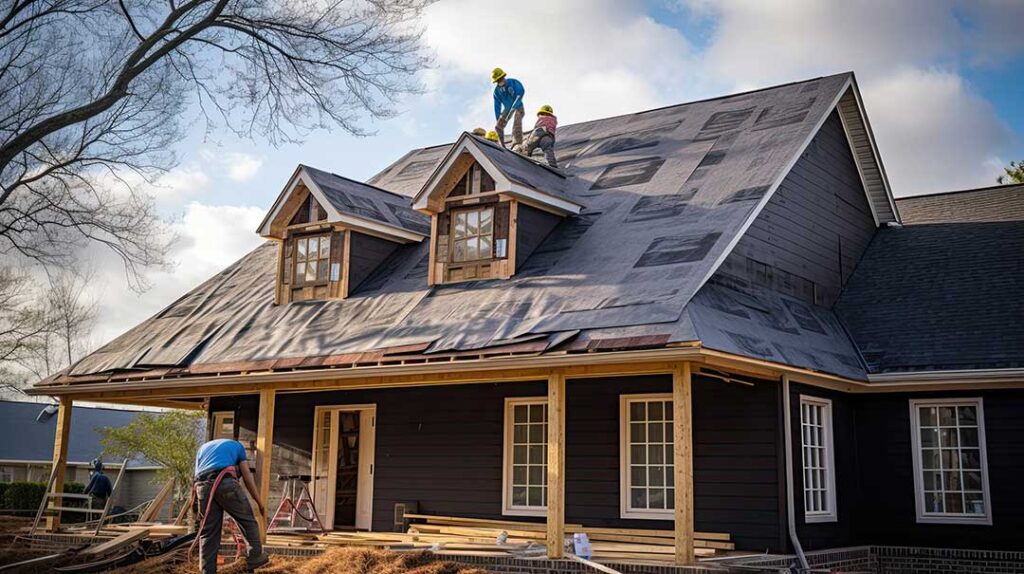
Why rooftop safety deserves extra attention in Ballston Lake, NY
Roof work is more hazardous than it may appear from the ground. A roof can be steep, brittle, slippery, or weakened by hidden moisture, while ladders and nearby electrical lines add separate risks. In Ballston Lake, seasonal snow, ice, wind, rain, and freeze-thaw cycles can make conditions change quickly.
For most homeowners, the safest approach is to limit rooftop access to situations that can be handled from the ground. A visual inspection from the yard, attic, or upper-floor window is often enough to identify warning signs without creating a fall hazard.
Should homeowners climb onto the roof?
Homeowners should avoid climbing onto a roof unless they have the right training, equipment, weather conditions, and a clear reason to be there. Walking on a roof is not the same as walking on a ladder or attic floor.
Roof surfaces may be slick from dew, frost, algae, dust, or fine ice that is difficult to see. Asphalt shingles can also become loose or fragile with age. A person may step through a weak area near a chimney, skylight, valley, or roof edge without any visible warning.
Do not climb onto the roof during:
- Rain, snow, freezing temperatures, or strong wind
- Early morning conditions when frost or dew may still be present
- Hot, sunny periods when shingles become soft and slippery
- Any situation involving suspected structural damage
- Darkness or poor visibility
- Times when the ground is muddy, icy, or uneven around the ladder
If a roof must be reached for an urgent safety reason, such as securing a loose covering after storm damage, keep the work limited and avoid walking directly on damaged areas. A roof with missing shingles, exposed decking, sagging sections, or fallen tree limbs should be treated as unsafe.
How can a roof be inspected safely from the ground?
A ground-level inspection can reveal many problems without requiring a ladder. Use binoculars if necessary, and inspect the roof from several angles after storms and at least once each spring and fall.
Look for:
- Missing, lifted, cracked, or curled shingles
- Dark areas that may indicate trapped moisture
- Sagging roof lines or uneven sections
- Damaged flashing around chimneys, vents, and roof edges
- Granules collecting near downspouts
- Gutters pulling away from the roofline
- Loose metal, branches, or other debris
- Daylight visible around attic penetrations
- Water stains on ceilings or upper walls
An attic inspection can also be useful, provided the attic floor is safe to walk on. Bring a flashlight and look for damp insulation, water marks, mold-like growth, rusted fasteners, or wet wood. Do not step between ceiling joists unless solid walking surfaces are installed.
A stain does not always appear directly below the leak. Water can travel along rafters, sheathing, insulation, or framing before entering the living space.
What is the safest way to use a ladder?
Many roof-related injuries occur before a person reaches the roof. Ladder placement, setup, and movement matter as much as the work itself.
Set the ladder on firm, level ground. Never place it on snow, ice, loose soil, a stack of materials, or a makeshift platform. Keep the area at the base clear of children, pets, tools, and foot traffic.
Before climbing:
- Inspect the rails, rungs, feet, locks, and hardware.
- Choose a ladder long enough for the task without standing on the top cap or highest prohibited step.
- Keep the ladder away from overhead electrical lines.
- Face the ladder while climbing and keep both hands available.
- Maintain three points of contact whenever possible.
- Do not carry bulky materials while climbing.
- Avoid leaning or reaching sideways; climb down and reposition the ladder.
If the ladder must rest against a roof edge, it should extend above the landing area enough to provide a secure handhold. The base should be secured so it cannot slide, and another adult should stabilize it when conditions or the setup make movement possible.
Never leave an unsecured ladder standing during wind or when children may access it.
How should snow and ice be handled?
Snow and ice on a roof create both fall and structural hazards. A snow-covered roof can hide skylights, weak decking, vent openings, and uneven surfaces. Snow sliding from a roof can also injure people or damage property below.
Avoid climbing onto a snowy roof to remove accumulation. Roof rakes designed for ground-level use may help remove limited snow from a safe position, but they must be used carefully. Pulling snow from the roof can create sudden slides, damage shingles, and place heavy loads on gutters or nearby structures.
Keep people and pets away from areas where snow may fall. Be cautious around roof edges, porch roofs, additions, and lower roof sections, where snow can collect in deeper layers.
Ice dams may form when heat escapes through the attic and melts snow unevenly. The resulting water can back up beneath shingles. Chopping ice with a tool can damage the roof surface and create falling ice hazards. Interior ceiling stains, damp insulation, or repeated winter leaks should be investigated from safe locations.
What precautions are needed after a storm?
After high winds, heavy rain, or falling branches, inspect the property from the ground before approaching the roof. Look for downed wires, leaning trees, broken branches, damaged gutters, and pieces of roofing on the ground.
Assume a downed wire is energized. Keep away from the area and do not use a ladder or metal tool near it. If a tree has struck the roof, do not enter rooms beneath visibly sagging ceilings or areas where framing may have shifted.
Temporary coverings can reduce water entry, but installing them may require walking on an unstable surface. A tarp that is poorly secured can also become dangerous in wind. If emergency protection is necessary, stay on the ground whenever possible and keep clear of loose materials.
Inside the house, place containers under active drips only if doing so does not require standing beneath a sagging ceiling. Move valuables away from the leak, but avoid electrical fixtures or outlets that may be wet.
Which roof tasks are safer to do from the ground?
Several routine tasks can be completed without stepping onto the roof:
- Clearing leaves from accessible gutters with stable ground-level tools
- Trimming branches that touch or overhang the roof, when no electrical hazards are present
- Checking attic ventilation from inside the attic
- Photographing roof conditions from the yard
- Cleaning downspout outlets and directing water away from the foundation
- Looking for loose debris after a storm
- Monitoring ceiling stains and recording when they appear
Gutter cleaning becomes risky when the home is tall, the ground is uneven, or the ladder must be placed on a slope. A long reach does not eliminate the need for stable footing. Stretching from a ladder can shift its center of balance even when the task seems minor.
When is professional help necessary for safety?
Some roof conditions require trained equipment or specialized judgment. This includes steep or multi-level roofs, structural sagging, widespread storm damage, chimney problems, skylight damage, active electrical hazards, and roofs that cannot be safely reached from stable ground.
A qualified roofing or structural professional may also be needed when the source of a leak is unclear, when an attic shows extensive moisture, or when roof damage could affect the ceiling or framing. Safety takes priority over completing a minor repair quickly.
For households in Ballston Lake, keeping roof access limited, monitoring seasonal changes, and preparing for snow and wind can prevent many avoidable injuries. The most useful inspection is often the one performed from a stable surface with clear visibility and no need to take a fall risk.
